

Best Time to Visit the Bahamas: A Month-by-Month Guide
Posted: November 23, 2026
The best time to visit the Bahamas is mid-December to mid-April for the most reliable weather, which is also when crowds and prices peak. May and November are the sweet spot: close to peak conditions with thinner crowds and softer rates. July to October runs hottest, wettest and cheapest. Near Nassau the sea stays swimmable all year, so the season you pick is really a question about crowds, cost and rain, not about whether you can get in the water.
The Short Answer
Most guides hedge across every season. We will not. If you want the highest odds of a flawless beach day and cost is secondary, come between mid-December and mid-April. If you want nearly the same weather without the crowds or the peak pricing, come in May or November. Those two months are the honest sweet spot, and they are what we would tell a friend to book.
Best overall, best value, fewest crowds
Best overall: May, with a published mean daily temperature of 77.5F on the island and the winter crowds gone. Best value: September and October, when demand across the destination is at its softest and the sea is near its warmest. Fewest crowds on a given day: that one depends less on the month than most people expect, because in Nassau crowds follow the cruise schedule as much as the calendar. More on that below.
The Bahamas' Travel Seasons at a Glance
Publishers draw the season lines in slightly different places, so treat the boundaries as convention rather than law. The rhythm itself holds across the islands, from Nassau and Paradise Island to Grand Bahama and the Exumas. The convention below matches what US News uses: peak runs mid-December to mid-April.
High season (mid-December to mid-April)
Winter escape season. The weather is at its most reliable, every flight and hotel knows it, and the destination is at its busiest and most expensive. Book animal programs and popular excursions well ahead in these months. The in-demand experiences sell out first when the islands are full.
Shoulder season (late April to June, and November)
The in-between months, and the savvy traveler's favorite. Warmth arrives (May's published mean is 77.5F, June's 80.4F), the peak-season crush thins and rates ease. November is the same trade on the other side of summer at 74.9F: storm risk fading but not yet finished, holiday crowds not yet arrived.
Low season (July to October)
The hottest stretch of the year (July's published mean is 82.3F) and the wettest, overlapping the heart of Atlantic hurricane season. It is also when the Bahamas costs the least and feels the most local. For flexible travelers who watch the forecast, low season is the best-kept deal in the calendar.
What each season costs you, and what it saves you
High season buys certainty and charges for it. Low season sells warmth at a discount and asks you to accept some weather risk. The shoulders split the difference so evenly that, for most travelers reading this, late April to June or November is simply the right answer.
Month-by-Month: What Each Month Is Actually Like
The temperatures below are the mean daily temperatures Blue Lagoon Island publishes for itself in its visitor FAQ, for the island near Nassau rather than a national average. The FAQ does not state the year span behind them, so read them as the island's published figures rather than a dated climate normal.
Separately, the island runs a public weather station: a WeatherSTEM installation, the first in the Caribbean, whose data the U.S. National Weather Service has cited in storm advisories affecting The Bahamas and the United States. It reports live temperature, wind, rainfall, lightning and UV rather than monthly averages, and the public dashboard is open to anyone at bahamas.weatherstem.com/bli. Use the table for planning and the dashboard for the day itself.
January, February, March
January is the coolest month of the year at 69.9F. Crowds and prices sit at their winter peak, and a light layer for the ferry ride is a smart pack. February holds nearly identical at 70.0F with the same peak-season energy, so book anything you care about early. March warms to 72.0F as spring break arrives, bringing the liveliest beach crowds of the season, with families and college groups sharing the sand in roughly equal measure.
April, May, June
April reaches 74.2F as high season exhales, and late April is the quiet door out of peak pricing. May is our pick for the best all-around month: 77.5F, warm sea, thinner crowds, softer rates, long days. June hits 80.4F as summer family season begins. It is also when the Atlantic hurricane season officially opens on June 1, though early summer is historically its quietest stretch.
July, August, September
July is the hottest month on the island at 82.3F: full summer, warm nights, afternoon showers that pass about as quickly as they build. August matches it at 82.2F with peak summer-vacation crowds and the storm season beginning to stir, so watch forecasts and enjoy the discounts. September eases to 81.1F and is the calendar's quietest, cheapest month, and the statistical heart of storm season, when flexible travelers get the islands nearly to themselves.
October, November, December
October cools to 78.7F as storm activity winds down and value stays excellent, a sleeper pick for warm-water swimmers. November at 74.9F is the other shoulder-season gem, though it is worth being precise about it: hurricane season runs through November 30, so November is the season's tail rather than the month after it. Storm risk is low and falling, holiday crowds have not arrived, and the weather usually feels like a reward. December averages 71.4F as high season returns; come mid-month and the winter escape machine is at full power.
When to Visit Based on What You Want
"Best time" really means "best time for me." Here is the same calendar sorted by what you are optimizing for.
Best time for a beach day
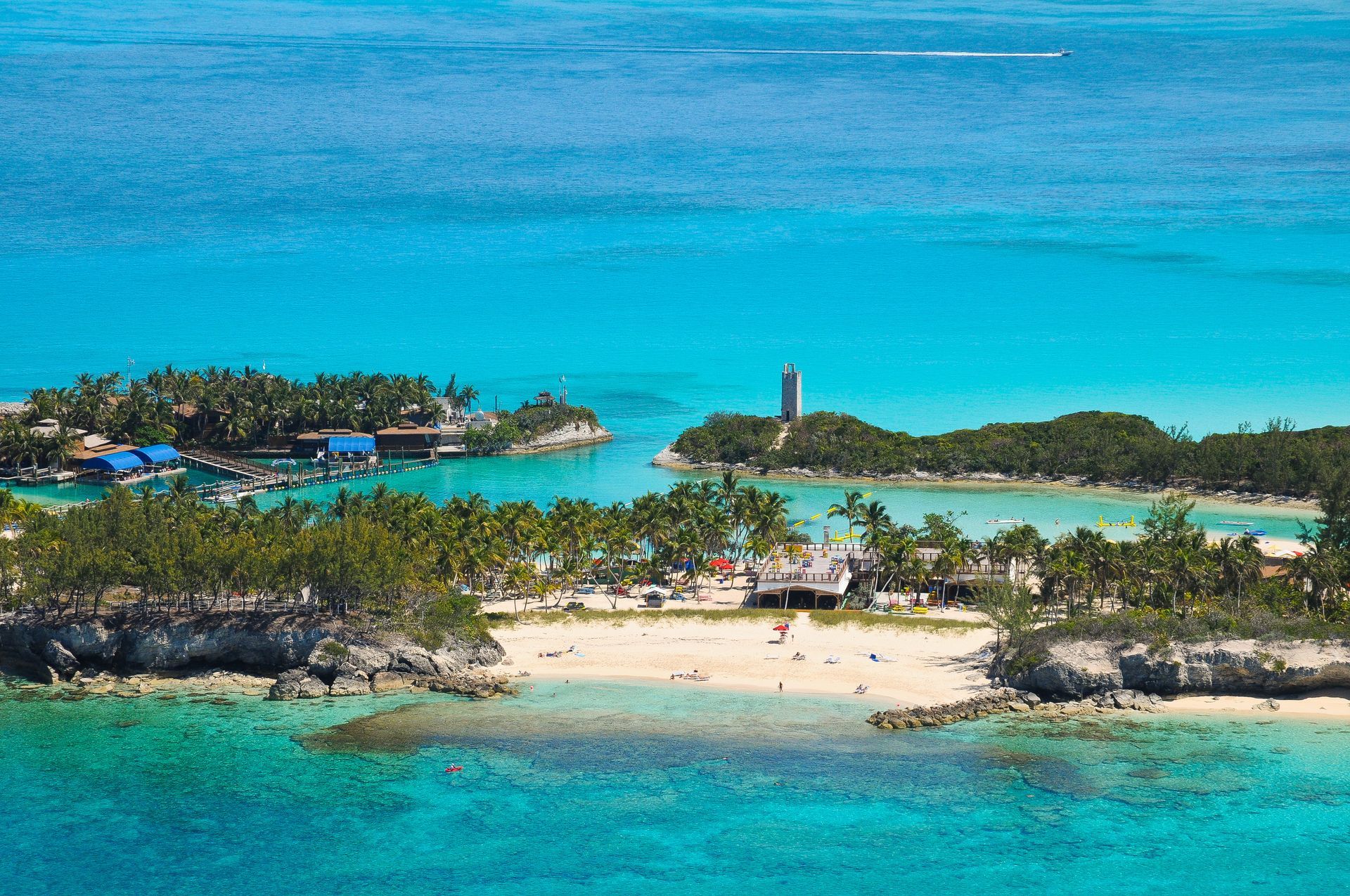
May through October, when the sea and air are warmest. The honest answer, though, is that a beach day works here in every month, which is why the island runs Island Beach Day year round. For a sense of how the day itself unfolds, from lagoon to lunch, here is what a beach day actually looks like. Winter visitors: the water runs cooler but stays swimmable.
Best time to avoid crowds
September and October first, then May and early November. If a quiet beach is the entire point of the trip, pair a low-crowd month with the Adults Only Beach Day and you have engineered about as much calm as the Caribbean offers. A first-timer's guide to the island covers how to plan the rest of the day around it.
Best time for the lowest prices
Late summer into early fall, roughly August through October, when demand across the destination is softest. We will not quote hotel or airfare figures because they move constantly, but the seasonal pattern is dependable: the fewer the visitors, the friendlier the rates, across flights, rooms and packages alike.
Best time if you are arriving by cruise ship
Any month works, because ships call on Nassau year round. The better question is which day, which the next section covers. Whatever the season, two habits serve cruise visitors well: read our cruise visitor guide before your port day, and book popular excursions as soon as your line opens them rather than gambling on the pier.
Why the Day Can Matter More Than the Month
Here is the piece of local knowledge the month-by-month guides never include. In Nassau, how busy a day feels is set less by the calendar month than by how many cruise ships are alongside that morning. We watch that rhythm from the water every day.
Nassau Cruise Port operates six berths and can host three Oasis-class ships at once. On its record day, June 8 2026, it welcomed 33,254 cruise passengers. A three-ship morning in "quiet" September can out-crowd a one-ship morning in February. That is how two travelers can visit in the same month and describe two different cities.
The fix is simple. Nassau Cruise Port publishes its schedule at nassaucruiseport.com. Check how many ships share your dates before you plan beach time, downtown wandering or museum stops. Land-based visitors can aim big plans at lighter port days, and cruise visitors already know their ship's dates and can book excursions early on multi-ship calls. Our 20 tips for visiting cover more of this plan-the-day craft, and if you are weighing options beyond our island, here is how the Nassau day trips compare.
Events Worth Planning Around
A few dates on the Bahamian calendar are worth building a trip around rather than merely tolerating.
Junkanoo and the December to January calendar
Junkanoo is the Bahamas' signature cultural celebration: costumed groups, goatskin drums, brass and cowbells parading through the early hours. The headline parades fall on Boxing Day (December 26) and New Year's morning, with Nassau's Bay Street hosting the largest and most competitive, per the Bahamas' official tourism site. If your trip brackets the holidays, losing one night of sleep to Junkanoo is the right trade.
Spring and summer festivals
The spring and summer calendar carries its own festival energy, including carnival-style events and weekly summer cultural festivals, but dates shift year to year. Rather than print a schedule that may age badly, we will point you to the official events calendar at bahamas.com to confirm what falls inside your travel window before you lock flights.
What About Hurricane Season and Water Temperature?
Two questions deserve their own guides, so here are the short versions.
Hurricane season in one short paragraph
The Atlantic hurricane season runs June 1 to November 30, with the statistical peak on September 10 and most activity between mid-August and mid-October, per NOAA's National Hurricane Center. That is a risk window, not a forecast, and most low-season days here are simply hot, bright and quiet. One practical note on the operator side: Blue Lagoon Island states that it operates 365 days a year, rain or shine, and that it does not refund for inclement weather unless it cancels the excursion. Both halves of that matter when you are booking inside the season. A fuller guide to Bahamas hurricane season is in production.
Water temperature in one short paragraph
The sea near Nassau ranges from about 72F (22C) in winter to 85F (30C) in summer, per the island's own published figures, which is why there is no month when swimming is off the table. Which months feel bath-warm versus briskly refreshing, and what that means for snorkeling, is its own guide.
Frequently Asked Questions
Whatever month you land in, the island runs year round. Start with an Island Beach Day or read the first-timer's guide before you book.
| Month | Mean daily temp (F) | What it feels like |
|---|---|---|
| January | 69.9 | Coolest month; sweater at breakfast, sunbathe by noon |
| February | 70.0 | Nearly identical, peak-season energy |
| March | 72.0 | Spring break arrives, liveliest beach crowds |
| April | 74.2 | High season exhales; late April exits peak pricing |
| May | 77.5 | Warm sea, thinner crowds, long days |
| June | 80.4 | Summer family season; hurricane season officially opens |
| July | 82.3 | Hottest month; warm nights, fast-passing afternoon showers |
| August | 82.2 | Peak summer crowds; storm season stirring |
| September | 81.1 | Quietest, cheapest month; statistical heart of storm season |
| October | 78.7 | Storm season winding down, value stays excellent |
| November | 74.9 | Season's tail through Nov 30; crowds not yet back |
| December | 71.4 | High season returns; Junkanoo waits at the end of it |
What are the best and worst months to visit the Bahamas?
Best: mid-December to mid-April for the most dependable weather, or May and November for nearly the same conditions with fewer people and better rates. Hardest: August through October, when heat, rain and storm risk all peak, though those months also deliver the year's best value. The trade-offs move; they never disappear.
What month is the cheapest to go to the Bahamas?
The late-summer and early-fall low season, roughly August through October, with September typically the quietest of all. Exact prices move with demand, so we will not quote figures, but the pattern holds year after year: fewest visitors, friendliest rates.
What is the hottest month in the Bahamas?
July, with a published mean daily temperature of 82.3F on Blue Lagoon Island, and August a near-tie at 82.2F. Practically, that means full-summer beach weather with warm evenings. Pack for sun first and everything else second.
What is the hurricane season for the Bahamas?
June 1 through November 30, with the highest activity from mid-August to mid-October and the statistical peak on September 10, per NOAA's National Hurricane Center. Most days inside that window are ordinary hot beach days. November sits inside the season, not after it.
When should you not go to the Bahamas?
There is no month the islands shut. If you need certainty above all, skip the peak storm months of August through October. If you dislike crowds and peak prices, skip mid-December through March. Everyone else can pick on price and preference.
Which is better, Turks and Caicos or the Bahamas?
They are different trips. The Bahamas is closer to the US, easier to reach on a cruise, and offers a wider spread of things to do in a single day: beaches, animal encounters, history, food. Turks and Caicos skews quieter and more resort-centered. For a first Caribbean trip or a family with mixed interests, the Bahamas' range is hard to beat. For a do-nothing week at one resort, either delivers.
How much will a trip to the Bahamas cost?
It depends on three levers more than any list price: the season (peak winter costs the most, late summer the least), the style (cruise day trip versus resort week), and how far ahead you book the popular experiences. We deliberately avoid quoting figures that would be stale in a month. Set the season first; it is the lever that moves everything else.
Last updated: September 2026
The best time to visit the Bahamas is mid-December to mid-April for the most reliable weather, which is also when crowds and prices peak. May and November are the sweet spot: close to peak conditions with thinner crowds and softer rates. July to October runs hottest, wettest and cheapest. Near Nassau the sea stays swimmable all year, so the season you pick is really a question about crowds, cost and rain, not about whether you can get in the water.
The Short Answer
Most guides hedge across every season. We will not. If you want the highest odds of a flawless beach day and cost is secondary, come between mid-December and mid-April. If you want nearly the same weather without the crowds or the peak pricing, come in May or November. Those two months are the honest sweet spot, and they are what we would tell a friend to book.
Best overall, best value, fewest crowds
Best overall: May, with a published mean daily temperature of 77.5F on the island and the winter crowds gone. Best value: September and October, when demand across the destination is at its softest and the sea is near its warmest. Fewest crowds on a given day: that one depends less on the month than most people expect, because in Nassau crowds follow the cruise schedule as much as the calendar. More on that below.
The Bahamas' Travel Seasons at a Glance
Publishers draw the season lines in slightly different places, so treat the boundaries as convention rather than law. The rhythm itself holds across the islands, from Nassau and Paradise Island to Grand Bahama and the Exumas. The convention below matches what US News uses: peak runs mid-December to mid-April.
High season (mid-December to mid-April)
Winter escape season. The weather is at its most reliable, every flight and hotel knows it, and the destination is at its busiest and most expensive. Book animal programs and popular excursions well ahead in these months. The in-demand experiences sell out first when the islands are full.
Shoulder season (late April to June, and November)
The in-between months, and the savvy traveler's favorite. Warmth arrives (May's published mean is 77.5F, June's 80.4F), the peak-season crush thins and rates ease. November is the same trade on the other side of summer at 74.9F: storm risk fading but not yet finished, holiday crowds not yet arrived.
Low season (July to October)
The hottest stretch of the year (July's published mean is 82.3F) and the wettest, overlapping the heart of Atlantic hurricane season. It is also when the Bahamas costs the least and feels the most local. For flexible travelers who watch the forecast, low season is the best-kept deal in the calendar.
What each season costs you, and what it saves you
High season buys certainty and charges for it. Low season sells warmth at a discount and asks you to accept some weather risk. The shoulders split the difference so evenly that, for most travelers reading this, late April to June or November is simply the right answer.
Month-by-Month: What Each Month Is Actually Like
The temperatures below are the mean daily temperatures Blue Lagoon Island publishes for itself in its visitor FAQ , for the island near Nassau rather than a national average. The FAQ does not state the year span behind them, so read them as the island's published figures rather than a dated climate normal.
Separately, the island runs a public weather station: a WeatherSTEM installation , the first in the Caribbean, whose data the U.S. National Weather Service has cited in storm advisories affecting The Bahamas and the United States. It reports live temperature, wind, rainfall, lightning and UV rather than monthly averages, and the public dashboard is open to anyone at bahamas.weatherstem.com/bli. Use the table for planning and the dashboard for the day itself.
| Month | Mean daily temp (F) | What it feels like |
|---|---|---|
| January | 69.9 | Coolest month; sweater at breakfast, sunbathe by noon |
| February | 70.0 | Nearly identical, peak-season energy |
| March | 72.0 | Spring break arrives, liveliest beach crowds |
| April | 74.2 | High season exhales; late April exits peak pricing |
| May | 77.5 | Warm sea, thinner crowds, long days |
| June | 80.4 | Summer family season; hurricane season officially opens |
| July | 82.3 | Hottest month; warm nights, fast-passing afternoon showers |
| August | 82.2 | Peak summer crowds; storm season stirring |
| September | 81.1 | Quietest, cheapest month; statistical heart of storm season |
| October | 78.7 | Storm season winding down, value stays excellent |
| November | 74.9 | Season's tail through Nov 30; crowds not yet back |
| December | 71.4 | High season returns; Junkanoo waits at the end of it |
January, February, March
January is the coolest month of the year at 69.9F. Crowds and prices sit at their winter peak, and a light layer for the ferry ride is a smart pack. February holds nearly identical at 70.0F with the same peak-season energy, so book anything you care about early. March warms to 72.0F as spring break arrives, bringing the liveliest beach crowds of the season, with families and college groups sharing the sand in roughly equal measure.
April, May, June
April reaches 74.2F as high season exhales, and late April is the quiet door out of peak pricing. May is our pick for the best all-around month: 77.5F, warm sea, thinner crowds, softer rates, long days. June hits 80.4F as summer family season begins. It is also when the Atlantic hurricane season officially opens on June 1, though early summer is historically its quietest stretch.
July, August, September
July is the hottest month on the island at 82.3F: full summer, warm nights, afternoon showers that pass about as quickly as they build. August matches it at 82.2F with peak summer-vacation crowds and the storm season beginning to stir, so watch forecasts and enjoy the discounts. September eases to 81.1F and is the calendar's quietest, cheapest month, and the statistical heart of storm season, when flexible travelers get the islands nearly to themselves.
October, November, December
October cools to 78.7F as storm activity winds down and value stays excellent, a sleeper pick for warm-water swimmers. November at 74.9F is the other shoulder-season gem, though it is worth being precise about it: hurricane season runs through November 30, so November is the season's tail rather than the month after it. Storm risk is low and falling, holiday crowds have not arrived, and the weather usually feels like a reward. December averages 71.4F as high season returns; come mid-month and the winter escape machine is at full power.
When to Visit Based on What You Want
"Best time" really means "best time for me." Here is the same calendar sorted by what you are optimizing for.
Best time for a beach day
May through October, when the sea and air are warmest. The honest answer, though, is that a beach day works here in every month, which is why the island runs Island Beach Day year round. For a sense of how the day itself unfolds, from lagoon to lunch, here is what a beach day actually looks like . Winter visitors: the water runs cooler but stays swimmable.
Best time to avoid crowds
September and October first, then May and early November. If a quiet beach is the entire point of the trip, pair a low-crowd month with the Adults Only Beach Day and you have engineered about as much calm as the Caribbean offers. A first-timer's guide to the island covers how to plan the rest of the day around it.
Best time for the lowest prices
Late summer into early fall, roughly August through October, when demand across the destination is softest. We will not quote hotel or airfare figures because they move constantly, but the seasonal pattern is dependable: the fewer the visitors, the friendlier the rates, across flights, rooms and packages alike.
Best time if you are arriving by cruise ship
Any month works, because ships call on Nassau year round. The better question is which day, which the next section covers. Whatever the season, two habits serve cruise visitors well: read our cruise visitor guide before your port day, and book popular excursions as soon as your line opens them rather than gambling on the pier.
Why the Day Can Matter More Than the Month
Here is the piece of local knowledge the month-by-month guides never include. In Nassau, how busy a day feels is set less by the calendar month than by how many cruise ships are alongside that morning. We watch that rhythm from the water every day.
Nassau Cruise Port operates six berths and can host three Oasis-class ships at once. On its record day, June 8 2026, it welcomed 33,254 cruise passengers. A three-ship morning in "quiet" September can out-crowd a one-ship morning in February. That is how two travelers can visit in the same month and describe two different cities.
The fix is simple. Nassau Cruise Port publishes its schedule at nassaucruiseport.com. Check how many ships share your dates before you plan beach time, downtown wandering or museum stops. Land-based visitors can aim big plans at lighter port days, and cruise visitors already know their ship's dates and can book excursions early on multi-ship calls. Our 20 tips for visiting cover more of this plan-the-day craft, and if you are weighing options beyond our island, here is how the Nassau day trips compare .
Events Worth Planning Around
A few dates on the Bahamian calendar are worth building a trip around rather than merely tolerating.
Junkanoo and the December to January calendar
Junkanoo is the Bahamas' signature cultural celebration: costumed groups, goatskin drums, brass and cowbells parading through the early hours. The headline parades fall on Boxing Day (December 26) and New Year's morning, with Nassau's Bay Street hosting the largest and most competitive, per the Bahamas' official tourism site. If your trip brackets the holidays, losing one night of sleep to Junkanoo is the right trade.
Spring and summer festivals
The spring and summer calendar carries its own festival energy, including carnival-style events and weekly summer cultural festivals, but dates shift year to year. Rather than print a schedule that may age badly, we will point you to the official events calendar at bahamas.com to confirm what falls inside your travel window before you lock flights.
What About Hurricane Season and Water Temperature?
Two questions deserve their own guides, so here are the short versions.
Hurricane season in one short paragraph
The Atlantic hurricane season runs June 1 to November 30, with the statistical peak on September 10 and most activity between mid-August and mid-October, per NOAA's National Hurricane Center . That is a risk window, not a forecast, and most low-season days here are simply hot, bright and quiet. One practical note on the operator side: Blue Lagoon Island states that it operates 365 days a year, rain or shine, and that it does not refund for inclement weather unless it cancels the excursion. Both halves of that matter when you are booking inside the season. A fuller guide to Bahamas hurricane season is in production.
Water temperature in one short paragraph
The sea near Nassau ranges from about 72F (22C) in winter to 85F (30C) in summer, per the island's own published figures, which is why there is no month when swimming is off the table. Which months feel bath-warm versus briskly refreshing, and what that means for snorkeling, is its own guide.
Frequently Asked Questions
What are the best and worst months to visit the Bahamas? Best: mid-December to mid-April for the most dependable weather, or May and November for nearly the same conditions with fewer people and better rates. Hardest: August through October, when heat, rain and storm risk all peak, though those months also deliver the year's best value. The trade-offs move; they never disappear.
What month is the cheapest to go to the Bahamas? The late-summer and early-fall low season, roughly August through October, with September typically the quietest of all. Exact prices move with demand, so we will not quote figures, but the pattern holds year after year: fewest visitors, friendliest rates.
What is the hottest month in the Bahamas? July, with a published mean daily temperature of 82.3F on Blue Lagoon Island, and August a near-tie at 82.2F. Practically, that means full-summer beach weather with warm evenings. Pack for sun first and everything else second.
What is the hurricane season for the Bahamas? June 1 through November 30, with the highest activity from mid-August to mid-October and the statistical peak on September 10, per NOAA's National Hurricane Center. Most days inside that window are ordinary hot beach days. November sits inside the season, not after it.
When should you not go to the Bahamas? There is no month the islands shut. If you need certainty above all, skip the peak storm months of August through October. If you dislike crowds and peak prices, skip mid-December through March. Everyone else can pick on price and preference.
Which is better, Turks and Caicos or the Bahamas? They are different trips. The Bahamas is closer to the US, easier to reach on a cruise, and offers a wider spread of things to do in a single day: beaches, animal encounters, history, food. Turks and Caicos skews quieter and more resort-centered. For a first Caribbean trip or a family with mixed interests, the Bahamas' range is hard to beat. For a do-nothing week at one resort, either delivers.
How much will a trip to the Bahamas cost? It depends on three levers more than any list price: the season (peak winter costs the most, late summer the least), the style (cruise day trip versus resort week), and how far ahead you book the popular experiences. We deliberately avoid quoting figures that would be stale in a month. Set the season first; it is the lever that moves everything else.
Whatever month you land in, the island runs year round. Start with an Island Beach Day or read the first-timer's guide before you book.