Dolphin vs Porpoise: How Can You Tell Them Apart?

Posted: October 12, 2026

Black and white icon of a calendar.
October 12, 2026

Oceanic dolphins and porpoises are related toothed whales, but they belong to different families. Many dolphins have a projecting beak, cone-shaped teeth and a curved dorsal fin; porpoises have a blunt face and flattened, spade-shaped teeth. These are useful clues, though fin shape and body size have exceptions. NOAA Fisheries explains the main differences.

If you have ever watched a gray animal surface and wondered which one it was, start with the face. A clear side view can tell you more than a quick glimpse of a fin. The comparison below helps you know what to look for and when a familiar rule needs a second look.

Dolphin vs porpoise: what are the key differences?

The table compares oceanic dolphins with porpoises. It describes common patterns, rather than a checklist that every species must fit. A bottlenose dolphin and a harbor porpoise make a useful starting pair, but there is much more variety within the dolphin family.

Feature First Name Last Name
1 Anne Evans
2 Bill Fernandez
3 Candice Gates
4 Dave Hill
Feature Oceanic dolphins Porpoises
Family Delphinidae Phocoenidae
Snout Many have a distinct projecting beak Short, blunt face without a distinct beak
Teeth Usually cone-shaped Flattened, spade-shaped
Dorsal fin Often curved or hooked; shape varies Often triangular; finless porpoises have no dorsal fin
Size / build Often longer and leaner, with wide variation among species Generally smaller and more compact
Sounds Many species produce whistles as well as clicks Known for high-frequency clicks rather than dolphin-like whistles

The physical comparison follows NOAA's dolphin and porpoise guide and harbor porpoise profile. Family names follow the Society for Marine Mammalogy's taxonomy list. The exceptions and sound differences are explained below.

Use the table to decide which features deserve a closer look. Teeth are a strong anatomical distinction, but they usually will not help you identify an animal swimming past a boat. The outline of the head and back is more useful in that situation.

Which visible clues help you tell them apart?

What should you look for in the face and teeth?

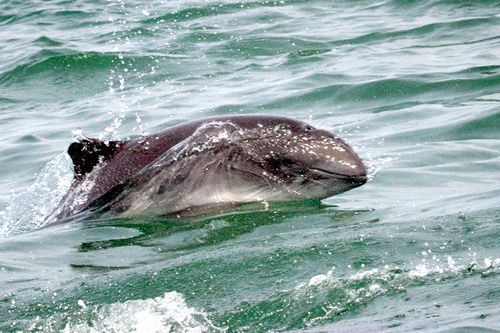
A bottlenose dolphin has a recognizable beak projecting from its rounded forehead. A harbor porpoise's head looks shorter and blunter, with no clearly separate beak. In a side-on photograph, that difference can be easier to see than body size.

Teeth provide another distinction. Think of a dolphin tooth as a cone and a porpoise tooth as a flattened spade. NOAA Ocean Service describes this tooth-shape difference, a useful anatomical clue even when two animals have similar gray coloring.

Still, a blunt face alone does not prove that an animal is a porpoise. Hector's dolphins, for example, have short snouts without obvious beaks. For identification, look for several features together and compare them with a reliable guide to the species in that location.

Can you rely on the dorsal fin or body shape?

The dorsal fin is the fin on an animal's back. The familiar bottlenose dolphin fin curves backward, while a harbor porpoise's fin looks more like a small triangle. Dolphins also tend to look longer and leaner; porpoises often have a more compact build.

These patterns have exceptions. Finless porpoises have no dorsal fin at all, as illustrated in the FAO marine mammal identification guide. Some dolphins also lack a dorsal fin, including the northern right whale dolphin in NOAA's identification materials.

Size needs context too. An adult of a small dolphin species and a young animal of a larger species can make a simple size comparison misleading. If you only saw a fin for a moment, it is reasonable to leave the identification open rather than force a dolphin-or-porpoise answer.

A harbor porpoise's short face and triangular fin are visible as it surfaces. Photo: NOAA Fisheries.

Are porpoises dolphins?

No. Porpoises belong to Phocoenidae, a separate family from the oceanic dolphins in Delphinidae. Both are cetaceans, the group that includes whales, dolphins and porpoises, and both belong among the toothed whales.

The Society for Marine Mammalogy's April 2026 list recognizes 38 species in Delphinidae and seven in Phocoenidae. Dating that count matters: scientific classifications change, and older websites may still give different totals.

That count covers the oceanic dolphin family. Animals commonly called river dolphins also belong to other families, so 38 is not a count of every animal with "dolphin" in its common name.

A useful memory cue is to separate relationship from identity: oceanic dolphins and porpoises share the toothed-whale group, while Delphinidae and Phocoenidae are separate families. Neither is simply a smaller version of the other.

Do dolphins and porpoises sound or behave differently?

How do their underwater sounds differ?

Many dolphins produce whistles as well as clicks. Porpoises are known for high-frequency clicks, so describing them as silent misses an important part of their lives underwater.

NOAA's marine mammal sound recordings include bottlenose dolphin clicks, buzzes and whistles alongside harbor porpoise clicks. A NOAA-supported harbor porpoise study describes their narrow-band, high-frequency echolocation clicks. Echolocation uses sound and returning echoes to gather information about the surroundings.

Listening note: NOAA plays its harbor porpoise recording at one hundredth of the original speed (0.01x), making those high-frequency sounds audible. This slowed playback helps explain the difference; it is not what you would hear standing beside the water.

Does a small group or a playful leap identify the animal?

Behavior varies by species and situation. Harbor porpoises are often seen in small groups and generally avoid approaching boats to ride their bow waves. That does not mean every porpoise behaves the same way.

Dall's porpoises can be active, social swimmers that bow-ride beside vessels. A lively animal near a boat is not necessarily a dolphin.

A leap or group size adds context, but cannot identify the family or rank its friendliness or intelligence. Our dolphin fun facts explore dolphin abilities and social lives beyond this comparison.

Which dolphins can you meet at Blue Lagoon Island?

At Blue Lagoon Island, you can meet Atlantic bottlenose dolphins. Their projecting beaks and curved dorsal fins offer a familiar example of the features in this comparison.

In the photograph below, look at where the forehead ends and the beak begins, then notice the dorsal fins. Those visible features help you apply the comparison without relying on gray coloring alone.

Our Dolphin Challenge FAQs answer broader questions about dolphins. For another animal comparison, read dolphins or sea lions.

If you are considering a visit, our guide to swimming with dolphins in The Bahamas explains what a dolphin experience involves.

To see the current program details, explore Blue Lagoon Island's Dolphin Encounter.

Dolphins at Blue Lagoon Island, with their beaks and curved dorsal fins visible. Photo: Dolphin Encounters.

Dolphin and porpoise questions

Are dolphins and porpoises the same thing?

No, although both oceanic dolphins and porpoises are toothed whales. A porpoise is not a baby dolphin and does not become a dolphin as it grows. The Society for Marine Mammalogy lists oceanic dolphins as Delphinidae and porpoises as Phocoenidae. Animals commonly called river dolphins also belong to other families.

Why do people call dolphins porpoises?

Common names are sometimes used loosely. NOAA Ocean Service notes that people often use dolphin, porpoise and whale interchangeably. That everyday usage does not change an animal's scientific classification. When someone says "porpoise," a photograph or species name can help clarify which animal they mean; the label alone does not identify a member of Phocoenidae.

Is an orca a dolphin or porpoise?

An orca, also called a killer whale, is an oceanic dolphin in Delphinidae. NOAA Fisheries identifies it as the largest member of the dolphin family. Its size and common name show why "small animal equals porpoise" and "whale cannot be a dolphin" are unreliable shortcuts. An orca is not a porpoise.

Do dolphins have sharp teeth?

Many dolphins have pointed, cone-shaped teeth, while porpoises have flattened, spade-shaped teeth. NOAA's comparison describes that difference. Tooth shape is a useful anatomical clue, but it usually is not visible when an animal surfaces. For a photograph taken at a distance, start with the head and fin, then compare several features with a species guide.

Read More Articles
By Dolphin Encounters Team • September 22, 2026
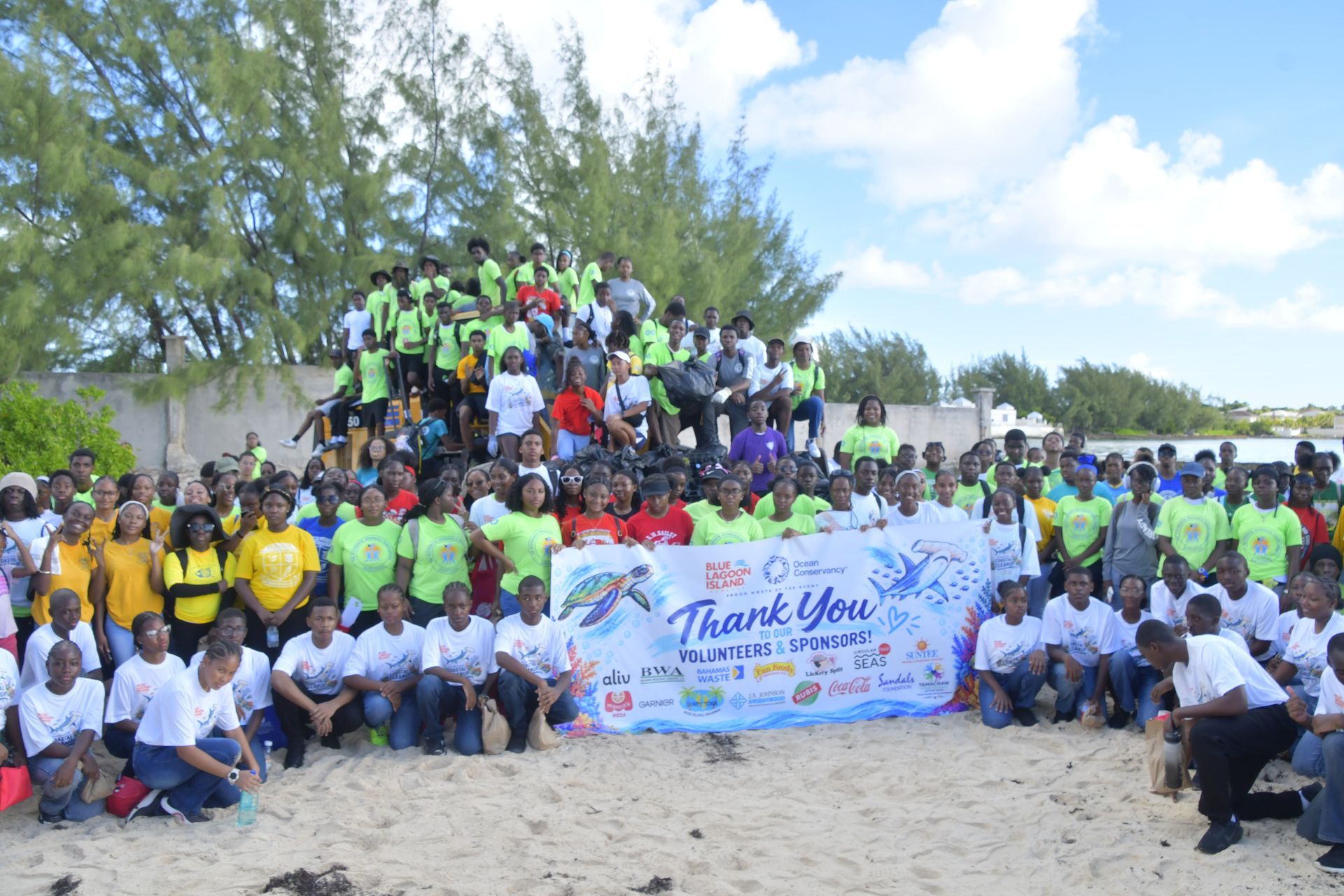
NASSAU, Bahamas (Sept. 19, 2026) — Blue Lagoon Island’s Project B.E.A.C.H. brought more than 500 volunteers together at Yamacraw Beach on Saturday, Sept. 19, for the 41st annual International Coastal Cleanup, removing marine debris while raising awareness about the importance of protecting The Bahamas’ coastal environment. Held from 8 to 10 a.m., the cleanup attracted students, youth organizations, corporate partners and community volunteers who worked along the shoreline to collect and categorize litter. The effort is part of the International Coastal Cleanup, a global initiative led by Ocean Conservancy that engages communities in removing marine debris and documenting the types and quantities of waste found along coastlines and waterways. This year, volunteers collected more than 1,200 pounds of debris comprising nearly 5,000 items, including glass and plastic bottles, metal cans, plastic bags, food wrappers and other waste. The data collected will contribute to Ocean Conservancy’s annual research, helping researchers, policymakers and environmental organizations better understand the sources and scope of marine pollution. “Every piece of debris removed from a beach represents a small but meaningful step toward healthier coastlines,” said Te-Shalla Clarke, education and sustainability officer at Blue Lagoon Island. “International Coastal Cleanup is an opportunity to take action while helping participants understand how everyday choices can affect our marine environment. We are grateful to everyone who gave their time this year and to the partners who continue to support these efforts.” The Yamacraw Beach cleanup brought together a broad cross-section of the New Providence community, including the Governor General’s Youth Award (GGYA), Boys’ Brigade, St. Andrew’s International School Eco Club, Eco-Schools Bahamas, Temple Christian School Eco Club, Aquinas College, Doris Johnson Senior High School, Rotary International, Team Z from Zane Lightbourne Team, Yamacraw Urban Renewal and Girl Guides, along with corporate sponsors and community partners. Participating organizations included Bahamas Waste, Bahamas Wholesale Agencies (BWA), Coca-Cola Circular Seas, ALIV, Fun Foods Wholesale Ltd., Marco’s Pizza, Rubis Bahamas, Sandals Foundation, Sandy Toes, Suntee, J.S. Johnson Insurance Agents & Brokers and Garnier, among others. Shelton Burrows, chairman of the 12-member Yamacraw Urban Renewal Advisory Board, expressed gratitude on behalf of the board and local residents for the cleanup effort. “We deeply appreciate Blue Lagoon Island and its business partners for choosing Yamacraw Beach for this cleanup effort,” he said. “In partnership with ENV Launch, we look forward to building on this initiative with ongoing maintenance at Stokes Cabana. It is especially inspiring to see our young people volunteering, engaging in positive activities, nation-building and fostering civic pride across The Bahamas.” Among the young volunteers was Kevin Bowe, a 12th-grade student and Environmental Club member at Aquinas College, who said the cleanup reinforced the need for greater environmental responsibility. “When I saw the amount of garbage on and along the beach, I thought we really need to do a better job when it comes to preserving our environment,” Bowe said. “We need to be more aware of how we interact with the environment around us and respect it by cleaning up after ourselves. That would be very good for all of us, especially in the future.” For Blue Lagoon Island, the International Coastal Cleanup is part of a broader commitment to sustainability, environmental education and conservation. Through Project B.E.A.C.H. (Bahamas Education of Animals and Conservation of Habitat), the island supports initiatives designed to deepen understanding of The Bahamas’ marine ecosystems and inspire more responsible choices both on land and in the water. “Environmental conservation is a key area of work for the Sandals Foundation and key amongst that is building education and stewardship. International Coastal Cleanup stands as the largest global voluntary movement. It builds awareness to environmental consciousness and provides a platform for people to take action,” said Snovakia Watson, public relations manager at Sandals Royal Bahamian. Watson added: “This year, we are pleased to partner with Blue Lagoon Island Bahamas and its dedicated volunteers as we come together to protect our delicate marine ecosystem. Together, we can make a difference, one coastline at a time.” The cleanup reinforces a simple message: Keeping beaches clean is a shared responsibility. By combining hands-on action with the collection of valuable marine debris data, the initiative addresses the immediate problem of litter while contributing to the broader global effort to protect oceans and coastal communities. Blue Lagoon Island’s Project B.E.A.C.H. organizes cleanups and educational initiatives throughout the year to deepen appreciation for The Bahamas’ marine ecosystems. The International Coastal Cleanup is part of a global effort to remove trash from beaches and waterways, identify pollution sources and inspire behavior changes that protect the environment. For more information on Blue Lagoon Island and its animal programs, visit www.dolphinencounters.com . About Blue Lagoon Island Blue Lagoon Island inspires and engages guests to learn more about marine animals and to preserve and protect the extraordinary ocean environment through educational, sustainable, interactive and authentic Bahamian experiences. The island offers encounters with native dolphins, stingrays and nurse sharks as well as California sea lions, among many educational activities including eco-nature walking tours that feature beautiful beaches and native flora and fauna. Blue Lagoon Island stands at the forefront of animal care and environmental stewardship in The Bahamas. As the first facility in the country to achieve certification from the American Humane Conservation program, it proudly maintains its Humane Certified status with reaccreditation earned in March 2024. The island is also accredited by the Alliance of Marine Mammal Parks and Aquariums and holds membership in the International Marine Animal Trainers’ Association (IMATA). Celebrated for its innovative educational programs, Blue Lagoon Island is a recipient of the prestigious Bahamian Cacique Award and a proud member of the Global Sustainable Tourism Council (GSTC) and Travelife, demonstrating its dedication to sustainable tourism and conservation. For more information, visit dolphinencounters.com .
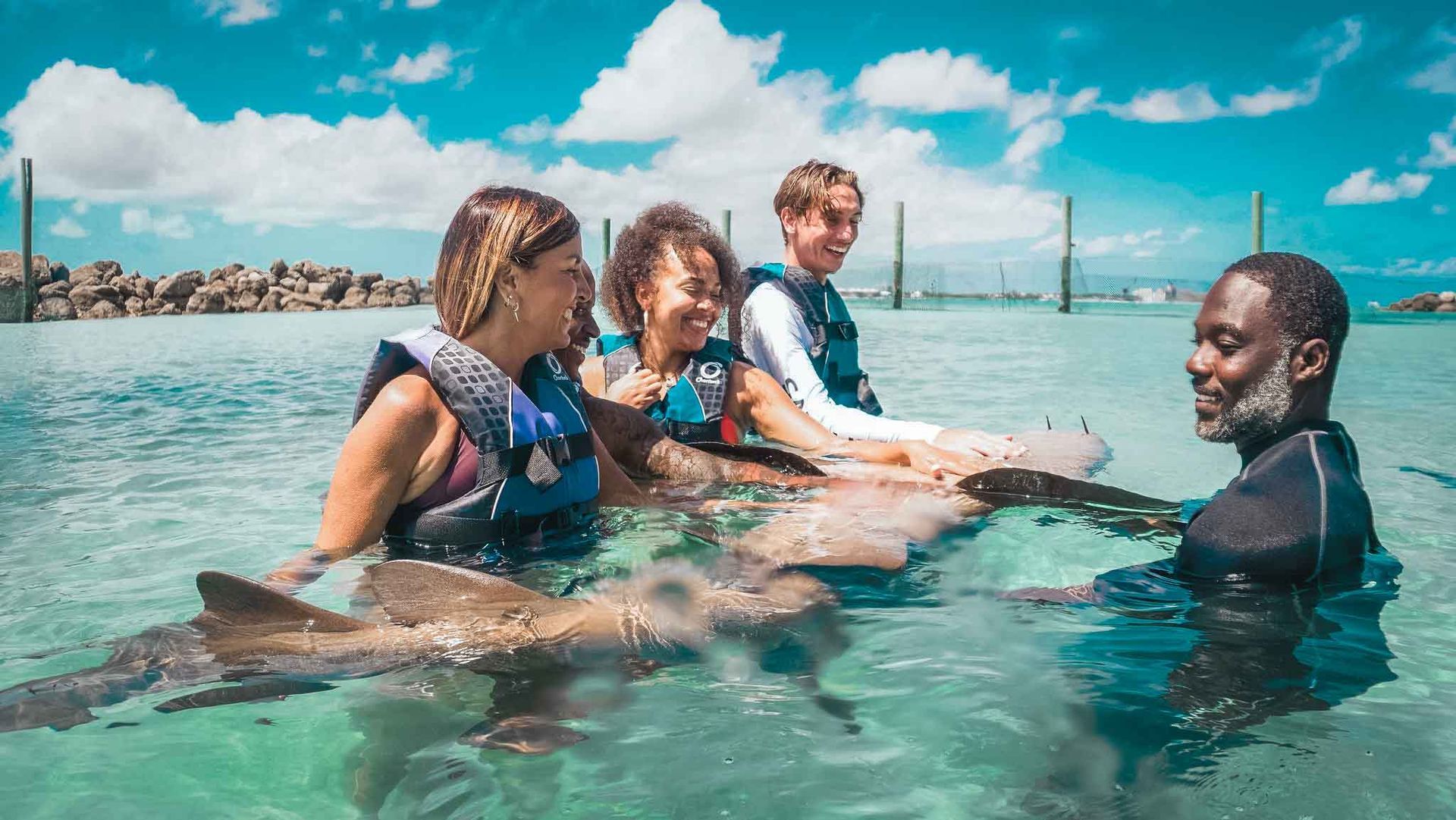
Guests snorkeling with gentle nurse sharks at Blue Lagoon Island near Nassau
By Dolphin Encounters Team • August 11, 2026
Where to go snorkeling in the Bahamas: the best Nassau spots, the marine life you will see, beginner tips, and an easy guided option at Blue Lagoon Island.
Tips for visiting Blue Lagoon Island Bahamas: beach lounger by the turquoise lagoon
By Dolphin Encounters Team • July 17, 2026
20 insider tips for visiting Blue Lagoon Island near Nassau: book early, where the ferry leaves, what to pack, water shoes, photos, and how to plan the day.